In AHLA's March 2026 survey, more than half of hotels said they were somewhat or severely understaffed, even though 70% had raised wages. That combination tells you something important. If higher pay alone fixed the hotel staffing shortage, it would be fixed by now. The shortage is really two problems that look like one: a tighter labor supply that no single hotel controls, and a set of hiring and job-quality problems that every hotel does. The fix starts with knowing which one you're facing.
Why Hotels Can't Find Staff
The Workforce is Still Rebuilding
The hotel industry lost a large share of its workforce during the pandemic and has been rebuilding ever since. Hotel Dive, reporting on AHLA's 2025 outlook, noted that hotel staffing was expected to remain "well below" 2019 levels, with only two states projected to exceed pre-pandemic staffing in 2025. AHLA's 2026 State of the Industry report projects the hotel workforce will grow by more than 30,000 jobs this year, to about 2.2 millio). Growth is real, but the hole was deep.
This is the part of the problem no individual hotel can fix. What you can control is how well you compete for the workers who are out there.
You're Competing With More than Other Hotels
Hourly hotel workers can also take jobs in retail, restaurants, warehouses and healthcare. Many of those employers offer comparable pay, and some offer schedules that are easier to plan around. A hotel that only benchmarks itself against the hotel down the street can look competitive on paper and still lose candidates.
The Candidates are There, But the Process Loses Them
Many hotels have more applicants than hires, which points to a process problem, not a supply problem. In a 2025 frontline hiring research, 68% of hospitality workers said they had abandoned a job application. In Cronofy's 2024 survey, 42% of candidates said they had left a hiring process because scheduling an interview took too long.
People Leave Almost as Fast as They're Hired
Accommodation and food services averaged a 4.2% monthly quit rate in 2025. When people leave that quickly, even a strong hiring process can feel like it's standing still.
What Actually Fixes the Hotel Staffing Shortage
Start with a quick diagnosis. If you get few applicants, focus on pay, schedules and your candidate pool. If you get plenty of applicants but few hires, focus on your hiring process. If you hire plenty of people but can't keep them, focus on retention. Most hotels have some of all three, but one is usually the biggest.
1. Benchmark Pay Against Your Real Competition
Compare your hourly rates with the warehouses, retailers, restaurants and healthcare employers in your area, not just other hotels. If you're behind, close the gap for your hardest-to-fill roles first. Pay alone won't solve staffing, as the AHLA data shows, but being uncompetitive guarantees you'll struggle.
2. Fix the Hiring Process
If candidates are applying but not becoming hires, the fixes are usually simple: a short mobile application, a response within a day and interviews scheduled within 48 hours. These changes cost far less than a pay increase and often have a faster effect. [INTERNAL LINK: Hiring at Scale: What Hotel Management Companies Get Wrong About ATS] [INTERNAL LINK: Candidate drop-off blog]
3. Offer Schedules People Can Plan Around
Post schedules in advance and keep them as stable as occupancy allows. Research on hourly service workers links unstable schedules to higher turnover. A predictable schedule is one of the few advantages a hotel can offer that many competitors don't.
4. Widen Your Candidate Pool
Many hotels recruit from the same narrow pool every time. Look further:
- Students and recent graduates, for part-time and seasonal roles.
- Older workers and retirees, who often want steady, part-time hours.
- People with criminal records. If you use criminal history in hiring decisions, avoid blanket exclusions. EEOC guidance says screens without an individualized assessment are more likely to violate Title VII. Many states and cities also limit when you can ask.
- People with disabilities. Focus on whether candidates can perform the job's essential functions, with or without a reasonable accommodation.
HigherMe has integrations with more than 25,000+ job boards so you can attract candidates from specific pools easily.
5. Show a Path Up
Hotels have something many hourly employers don't: clear career ladders from room attendant to supervisor, front desk agent to front office manager and technician to chief engineer. Put that path in your job posts and promote from within when you can.
6. Keep the People You Already Have
Every employee you keep is a hire you don't have to make. Strong onboarding, early check-ins and a manageable first few weeks reduce the turnover that keeps you hiring for the same roles.
What Doesn't Fix It
Two common responses rarely solve the problem on their own. More job ads bring in more applicants, but if your process loses most of them, you're paying for traffic you can't convert. Signing bonuses can attract candidates, but without a plan to keep them, they can also attract people who leave as soon as the bonus pays out.
How HigherMe Helps
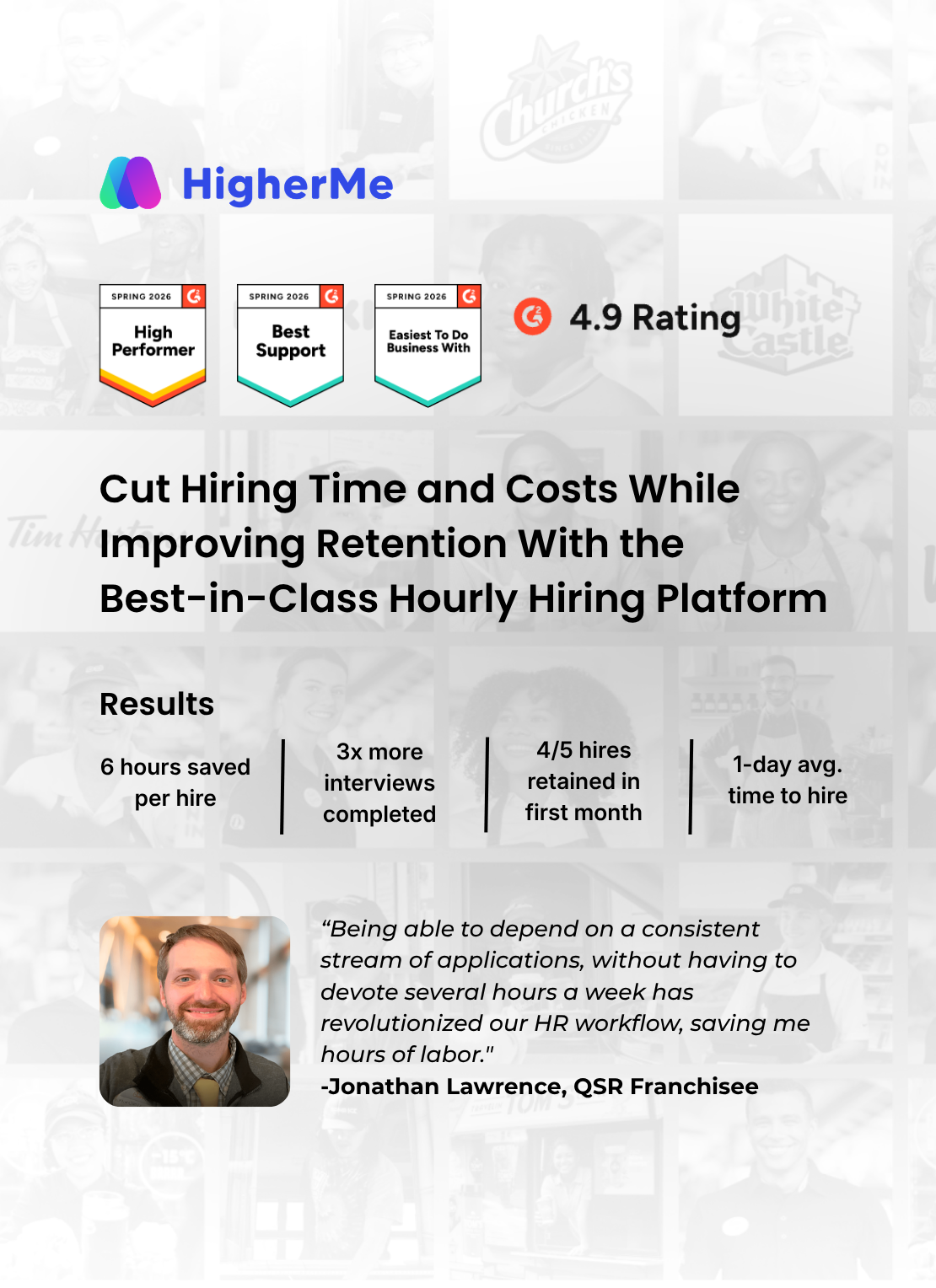
HigherMe is an hourly hiring platform used across 20,000+ locations, including hospitality. It works on the part of the staffing shortage you can control, the hiring process:
- Text-to-Apply and short mobile applications that candidates can finish in minutes.
- NextMatch AI screening and self-scheduled interviews, so candidates hear back while they're still interested.
- Paperless onboarding that gets new hires ready before their first shift.
Hotels can't fix the labor supply on their own. They can fix almost everything else: how they pay compared with the real competition, how fast they hire, how stable their schedules are and how well they keep people. Our view: most hotels that say they can't find staff are losing more candidates in their own process than the labor market is taking from them. To see how HigherMe helps hotels turn more applicants into hires, visit HigherMe.
Frequently Asked Questions
1. Why is there a hotel staffing shortage?
The hotel workforce lost a large share of workers during the pandemic and is still rebuilding, while hotels compete with retail, restaurants, warehouses and healthcare for hourly workers. Slow or difficult hiring processes and high turnover make the gap worse. HigherMe helps hotels address the hiring side with fast mobile applications and automated screening and scheduling.
2. Is the hotel labor shortage getting better in 2026?
Slowly. AHLA projects the hotel workforce will grow by more than 30,000 jobs in 2026, to about 2.2 million (AHLA), but more than half of hotels still reported being understaffed in March 2026. Hotels with faster hiring processes are better placed to benefit as the labor market improves, which is where HigherMe helps.
3. How can hotels attract more applicants?
Benchmark pay against all local hourly employers, offer predictable schedules, show a career path in your job posts and recruit from wider pools such as students, older workers and people with criminal records, following EEOC guidance. Then make applying easy. HigherMe's Text-to-Apply lets candidates apply from their phones in minutes.
4. Do signing bonuses work for hourly hotel jobs?
They can attract candidates, but they rarely fix staffing on their own. Without good onboarding and retention, bonus hires may leave soon after the bonus pays out. Many hotels get more value from faster hiring and stable schedules. HigherMe helps you move quickly on candidates so you depend less on bonuses to win them.
5. How do hotels compete with other employers for hourly workers?
Compete on more than pay: offer predictable schedules, a visible path to promotion and a hiring process that responds within a day. Speed matters, because hourly candidates often accept the first solid offer they get. HigherMe's automated screening and self-scheduled interviews help hotels make offers faster.


.png)