In Cronofy's 2024 survey of 12,000 job candidates, 42% said they had left a hiring process because scheduling an interview took too long. Hourly candidates often apply to several jobs at once, so the employer who moves first usually wins. Most of the candidates hotels lose aren't rejected, and they haven't lost interest in the job. They get lost in the hours and days after they hit submit. That stretch is entirely in your control. Here's how to reduce candidate drop-off between application and interview across every property you run.
Where Candidates Disappear After They Apply
1. The Silence after "Submit"
At many properties, an application goes in and nothing comes back for days. The GM is busy, and applications pile up until someone has time to look. A candidate who hears nothing assumes the answer is no and keeps applying elsewhere. Every day of silence is a day another hotel can call first.
2. Scheduling Back-and-forth With a Busy GM
When someone finally reaches out, the scheduling begins. The GM calls, the candidate is at their current job, the candidate calls back, and the GM is in a meeting with the owner. In Cronofy's survey, the largest share of candidates (31%) said their first interview took two to three weeks to schedule.
3. Interviews Booked Days Away
Even once a time is agreed, the interview is often days out. Between now and then, the candidate gets other offers. Some take one, and some simply don't show up. In hospitality, 26% of workers in a 2025 frontline hiring research said they had skipped an interview.
4. Messages that Never Get Read
Interview details get sent to an email inbox the candidate rarely checks. Calls come from an unknown number and go unanswered. Many hourly candidates live on their phones, but not on email or voicemail.
How to Reduce Candidate Drop-Off, Step by Step
These eight steps follow the order things happen after someone applies. None of them requires more recruiters. They require a process that runs the same way at every property.
1. Acknowledge Every Application within Minutes
Send an automatic message as soon as an application comes in. Confirm you received it, say what happens next and when. A candidate who knows they'll hear back within a day is far less likely to keep shopping their availability to other hotels.
2. Screen with a Few Knockout Questions, Not a Phone Call
Most hourly hiring decisions come down to a handful of facts: which shifts the candidate can work, whether they can work weekends, how they'll get to the property and whether they meet the role's basic requirements. Ask those questions in the application or right after it, and ask every candidate the same ones. Qualified candidates move forward in minutes instead of waiting for a phone screen. Read more about this here!
3. Let Qualified Candidates Book their Own Interview
Have each GM block out interview times each week. Then let qualified candidates pick a slot themselves, with no phone tag. Candidates want this: in Cronofy's survey, interview scheduling was the top part of the hiring process candidates wanted automated, at 37%.
4. Interview Within 48 Hours
The shorter the gap between application and interview, the fewer chances the candidate has to accept another offer. Aim for 48 hours. For high-volume roles like housekeeping, consider standing open interview hours, such as two afternoons a week when any qualified candidate can come in the same day.
5. Communicate by Text, with Consent
Text is where most hourly candidates actually read their messages. But texting candidates comes with legal rules. Under the Telephone Consumer Protection Act, a text message counts as a "call," automated texts generally require the person's prior express consent, and people can revoke that consent by reasonable means (FCC). In practice, ask for consent to text in the application, and honor opt-outs like "STOP" immediately.
6. Send Reminders, and Make Rescheduling Easy
Send a reminder the day before the interview and another the morning of. Include the address, where to park, who to ask for and what to bring. Give candidates a simple way to reschedule. A rescheduled interview is far better than a no-show, and most no-shows are people who couldn't make it and didn't know how to say so.
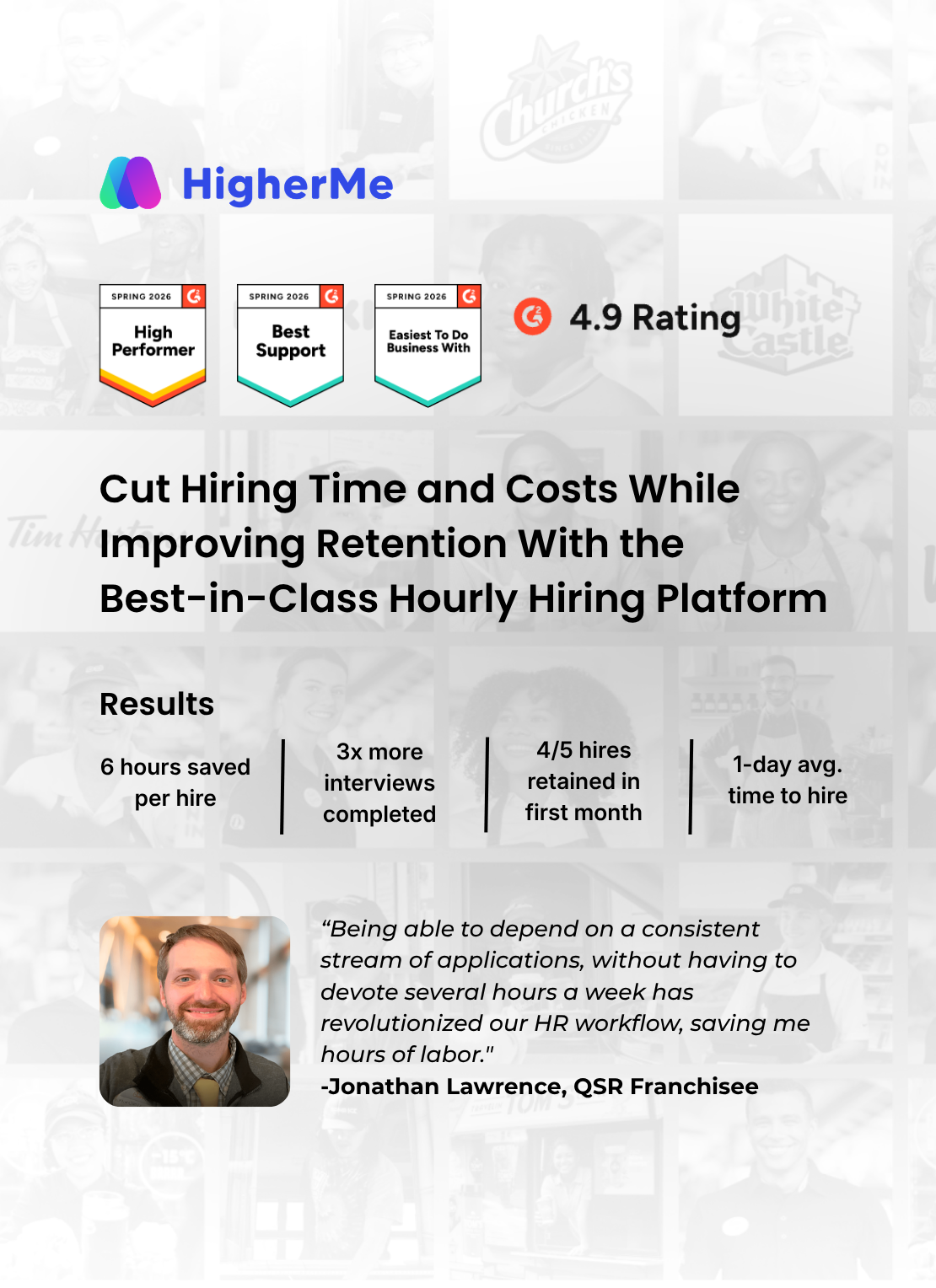
HigherMe's auto scheduling feature reports 67% fewer no shows. Read more here!
7. Re-engage Candidates Who Go Quiet
Don't write off candidates after one missed message. If someone doesn't respond to an interview invitation within 24 hours, send one follow-up with new times. If someone misses an interview, offer one chance to rebook. Then let it go. This recovers candidates you already paid to attract, at almost no cost.
8. Measure Drop-off at Every Step, by Property
You can't fix what you can't see. Track three numbers for each property: hours from application to first response, the share of qualified candidates who book an interview, and the share of booked interviews that actually happen. Compare properties monthly. The gaps will show you exactly which step, at which hotel, is leaking candidates.
Read More: Hotel Hiring Metrics: 10 KPIs Every Multi-Property Operator Should Track
How HigherMe Helps Keep Candidates Moving
HigherMe is an hourly hiring platform used across 20,000+ locations, including hospitality. It's built to cover the gap between application and interview:
- Text-to-Apply lets candidates apply from their phones in minutes. HigherMe reports that Text-to-Apply candidates are 8x more likely to be hired than applicants from other channels.
- NextMatch AI asks every candidate the same structured screening questions, so qualified candidates move forward without waiting for a phone call.
- Automated interview scheduling lets qualified candidates book into the times managers set, with text and email reminders. HigherMe reports 67% fewer interview no-shows
The Bottom Line
Candidate drop-off between application and interview isn't a candidate problem. It's a speed and communication problem, and it's one of the cheapest hiring problems to fix. Our view: the hotel that responds first and books the interview fastest wins most hourly hires, regardless of who posted the job first. To see how HigherMe keeps candidates moving from application to interview, visit HigherMe.
Frequently Asked Questions
1. Why do candidates drop out after applying for a job?
Most candidates drop out because of silence, slow scheduling or interviews booked too far out, not because they lost interest. In Cronofy's 2024 survey, 42% of candidates said they had left a hiring process because scheduling took too long. HigherMe reduces that gap with instant screening and self-scheduled interviews, so candidates hear back while they're still interested.
2. How fast should hotels respond to job applicants?
Acknowledge every application within minutes, and aim to interview qualified candidates within 48 hours. Hourly candidates often apply to several jobs at once, so the employer who responds first usually gets the hire. HigherMe's automated screening and scheduling let properties respond immediately, even when the GM is busy running the hotel.
3. How do you reduce interview no-shows?
Book interviews quickly, send reminders by text the day before and the morning of, and make rescheduling easy. In hospitality, 26% of workers in iCIMS's 2025 research said they had skipped an interview. HigherMe reports 67% fewer interview no-shows with its automated scheduling and reminders.
4. Is text recruiting effective for hourly hiring?
Yes, for most hourly roles, text reaches candidates faster than email or voicemail. Get the candidate's consent before sending automated texts and honor opt-out requests, since texts are treated as calls under the Telephone Consumer Protection Act (FCC). HigherMe's Text-to-Apply lets candidates apply and communicate by text from their phones.
5. What is a good candidate drop-off rate?
There's no reliable published benchmark for hotels, so the best target is your own top-performing properties. Track drop-off at each step, from application to first response, booking and attendance, and compare properties monthly. HigherMe keeps applications, screening and interview scheduling in one system across locations, which makes those numbers easier to track consistently.