

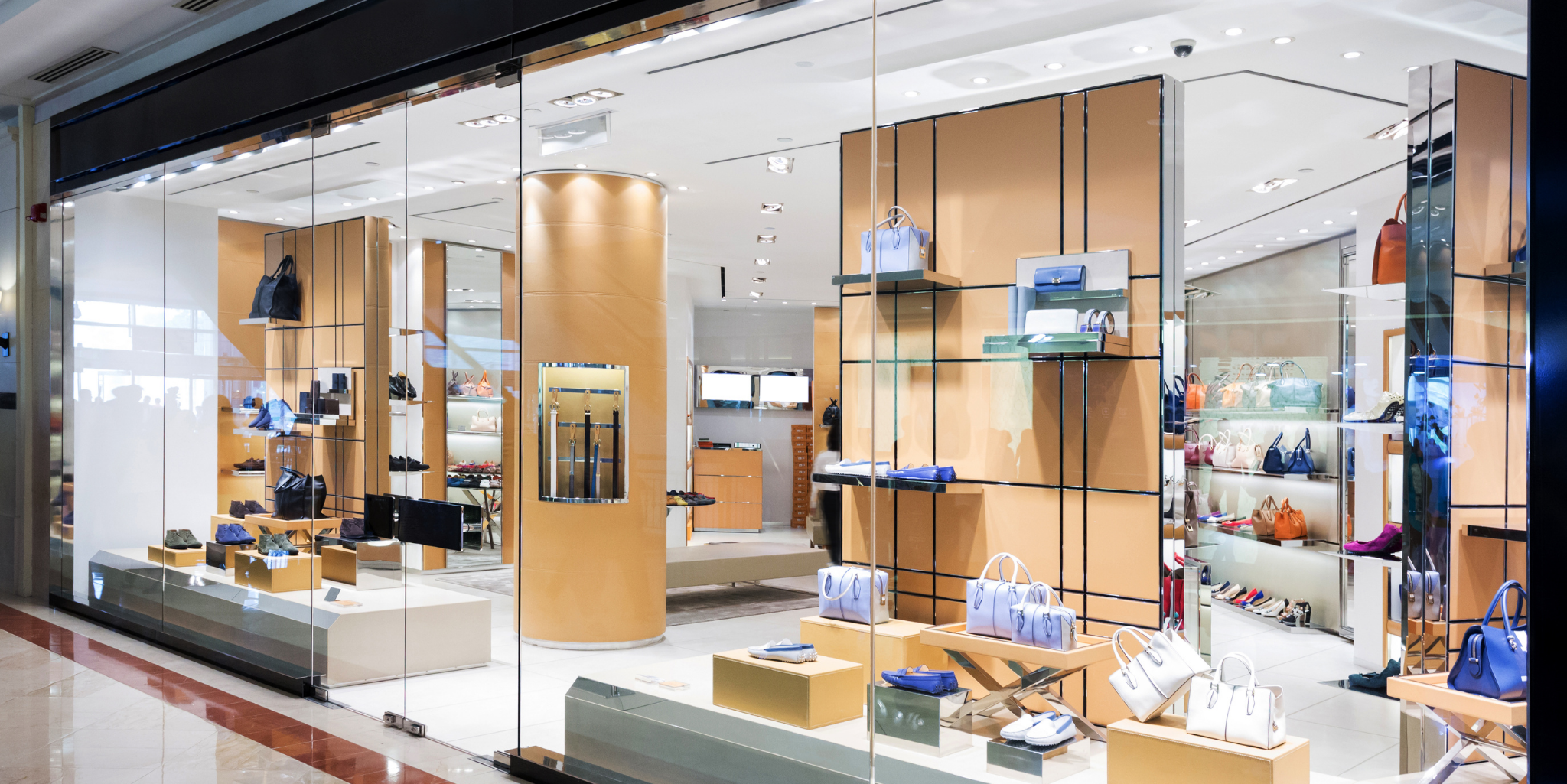

Retail frontline turnover sits at around 60% annually. Some subsectors push closer to 81%. That means a 100-person store could be replacing 60 people every year, and at $2,000 to $10,000 per replacement depending on the role, those costs stack up fast. Meanwhile, 43% of new retail hires leave within their first 90 days. You are not just hiring. You are re-hiring, constantly.
The hiring tools that work in retail are not the same ones that work in office environments. Your applicants are on mobile. Your managers are on the floor. And the window between someone applying and someone accepting a competing offer somewhere else is measured in hours, not days.
Why Retail Hiring Is Its Own Category of Hard
Retail operators deal with hiring pressure from multiple directions at once.
Seasonal spikes create volume surges that a manual process simply cannot absorb. Holiday hiring, back-to-school, summer staffing, these are not gradual ramp-ups. They hit fast and require filling dozens of roles across locations in a compressed window.
Multi-location retail groups face the same coordination problem as any franchise operator. Inconsistent processes at different stores, no central visibility into pipeline health, and managers at each location doing things differently. The brand experience suffers before a candidate even walks in for a shift.
And the candidate pool itself has changed. Gen Z frontline applicants expect a mobile-first experience. A ten-step application form with a desktop login is not a barrier they push through, it is a signal to move on. According to Fountain's frontline workforce research, retail annual turnover now sits at 60%, and hiring costs have doubled since 2020 largely because too many companies are still running manual processes that were outdated years ago.
Retail hiring software in 2026 needs to do three things: capture candidates where they are, move fast enough to beat competing offers, and make onboarding smooth enough that people actually show up on day one.
Here are the six platforms worth evaluating.
6 Best Hiring Software Platforms for Retail in 2026
1. HigherMe: Best for Multi-Location Retail and Franchise Operators
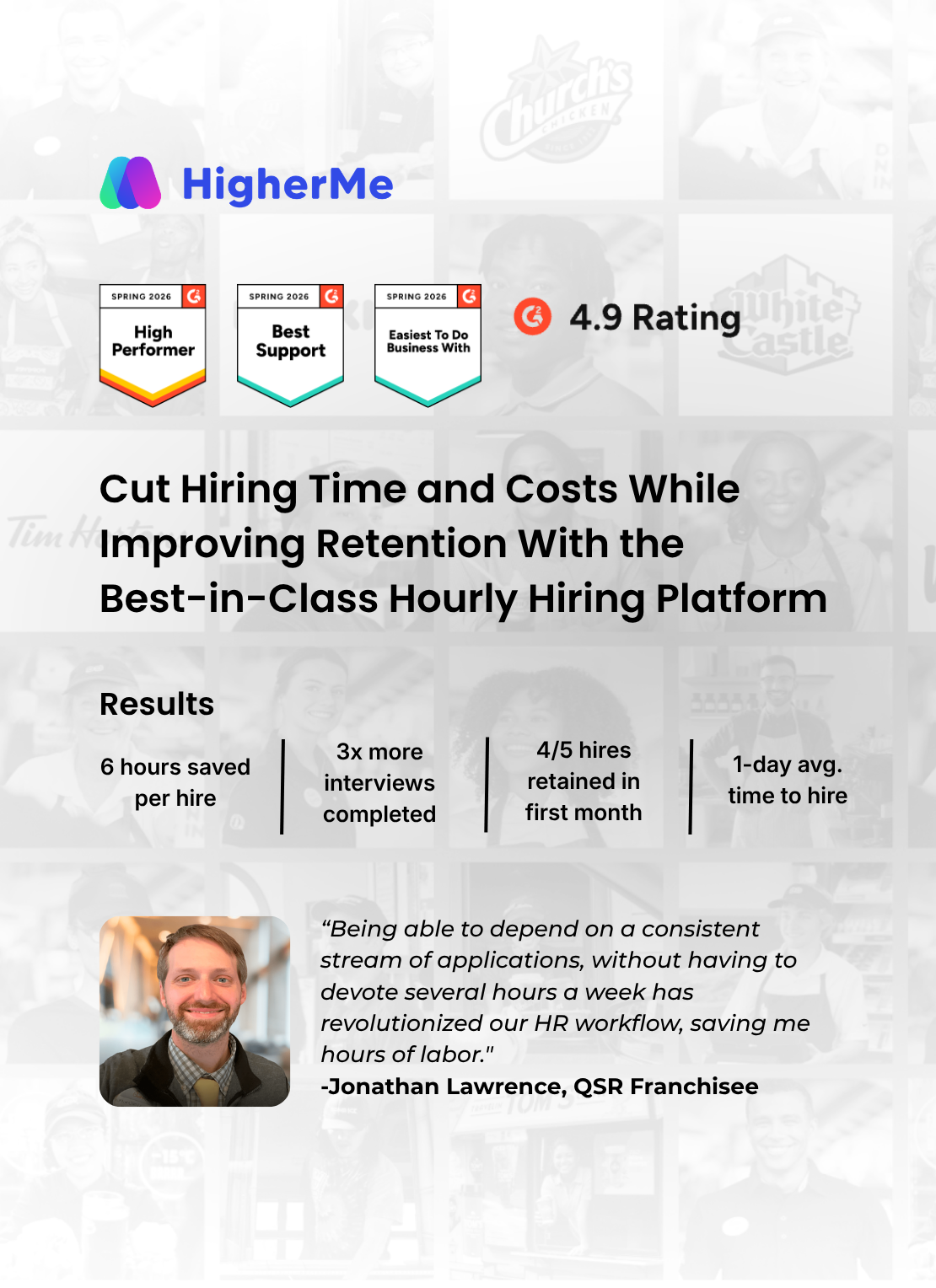
HigherMe is purpose-built for hourly frontline hiring. Retail falls squarely in that lane. The platform serves 20,000+ locations across QSR, retail, healthcare, and service industries — operators who are running constant volume, dealing with seasonal surges, and need a process that works without a dedicated HR team at every site.
The features are built around how retail candidates actually behave, not how corporate hiring managers wish they would.
-
Text-to-Apply is one of the most direct ways to capture in-store candidates. A poster in your window or at your register includes a keyword and phone number. Someone interested texts it. Four minutes later, they have submitted a complete application from their phone. No job board login. No desktop required. Candidates coming through this channel are 8x more likely to convert to a hire than those from other sourcing channels. For retail operators, that kind of in-store capture is a meaningful competitive advantage during peak hiring seasons.
-
NextMatch AI (Amelia) handles pre-screening automatically, running a conversational interview with every applicant before a manager touches the pipeline. In a seasonal hiring push where you might receive 200 applications in a week, this is what keeps your store managers focused on running the floor instead of becoming full-time recruiters.
-
Candidate Score ranks every applicant by proximity to your store, shift availability, and relevant experience. For a retail operator prioritizing local hires who can actually cover the shifts you need, this ranking does meaningful filtering work upfront.
-
Hiring Hub gives multi-location retail operators a centralized view across every store. One dashboard showing every pipeline at every location. Bulk actions, centralized reporting, no jumping between separate accounts. For a regional manager overseeing 10 or 20 locations through a busy season, the visibility alone is worth the switch.
-
Paperless Onboarding connects directly to the hiring pipeline. Once an offer is accepted, the new hire completes their W-4, direct deposit, I-9, and employee handbook before their first shift. First day starts with training, not a pile of forms. For retail operators who hire dozens of people before a peak season, removing that onboarding friction matters.
Why HigherMe Is the Top Pick for Retail
Retail hiring has two modes: steady-state turnover replacement and peak-season volume surges. Most tools handle one reasonably well. HigherMe handles both, because the underlying architecture- mobile-first applications, AI pre-screening, automated scheduling, centralized multi-location visibility, is built for exactly this kind of sustained, high-volume frontline hiring. You do not need a different approach when November arrives. The system scales with the demand.
2. Fountain: Built for High-Volume Retail at Enterprise Scale
Fountain specializes in moving large numbers of candidates through a hiring funnel efficiently. Its stage-based workflow automation and SMS-driven communication work well for enterprise retailers running continuous high-volume hiring across many locations. Brands like Sweetgreen use it at scale for exactly this reason.
For most mid-size retail operators, the practical issue is setup complexity. Getting Fountain configured for your specific workflows takes dedicated HR resources and implementation time. Post-hire onboarding is also thin, meaning you will need another tool once someone accepts. Best suited for large retail enterprises with dedicated HR teams who need enterprise-grade funnel automation.
3. Harri: Hospitality-Adjacent, Some Retail Crossover
Harri is primarily built for full-service restaurants and hospitality groups, combining recruiting with scheduling and workforce management. Some of those capabilities carry over into retail, particularly for food retail or hospitality-adjacent concepts where shift management is as important as hiring.
For pure retail operators, the fit is less direct. The hiring flow was not designed for the fast, mobile-native experience your candidates expect, and the broader workforce management platform adds overhead that a lean retail operation does not always need. Worth evaluating if you are in food retail or a hospitality-adjacent concept. Less of a natural fit for general merchandise or apparel retail.
4. Hireology: Good for Compliance-Heavy Multi-Location Retail
Hireology's structured hiring workflows and standardized processes appeal to retail franchise systems where brand consistency and compliance documentation matter. Approval chains, centralized reporting, and standardized application stages give corporate and franchise HQ teams real visibility across their retail network.
The tradeoff is the same one that shows up in any fast-paced hiring environment. Structured workflows add steps. In retail, where a candidate may have applied to three other places the same afternoon, those extra steps create drop-off. If your retail operation has a dedicated HR function and compliance is the top priority, Hireology is a legitimate option. If speed to hire is the primary pressure, you will feel the friction.
5. Homebase: Scheduling First, Hiring Second
Homebase built its reputation as a scheduling and time-tracking tool for small retail and restaurant operators. The free tier is genuinely useful, and for a single-location retailer with modest hiring needs, it is a practical starting point.
The limits show up as you scale. Hiring is not the core product, and that shows in feature depth. No meaningful AI screening. Text-to-Apply is not native. Multi-location hiring management is limited. For a retail operator managing constant frontline turnover across several locations, Homebase's hiring capabilities hit their ceiling faster than most expect. A solid tool for what it was originally built for. Less suited to retailers where hiring is a daily operational reality, not an occasional task.
6. GetHired: Entry-Level Tool for Small Retail Operations
GetHired focuses on job posting and basic applicant tracking. Simple, affordable, and low friction to get started. For a single-location independent retailer with occasional openings and a tight budget, it covers the basics.
At multi-location retail scale, the gaps are significant. No multi-location architecture, no AI screening, limited automation. It was not designed to grow with a retail operation. Best used as an entry point while you are small, with the understanding that you will eventually outgrow it.
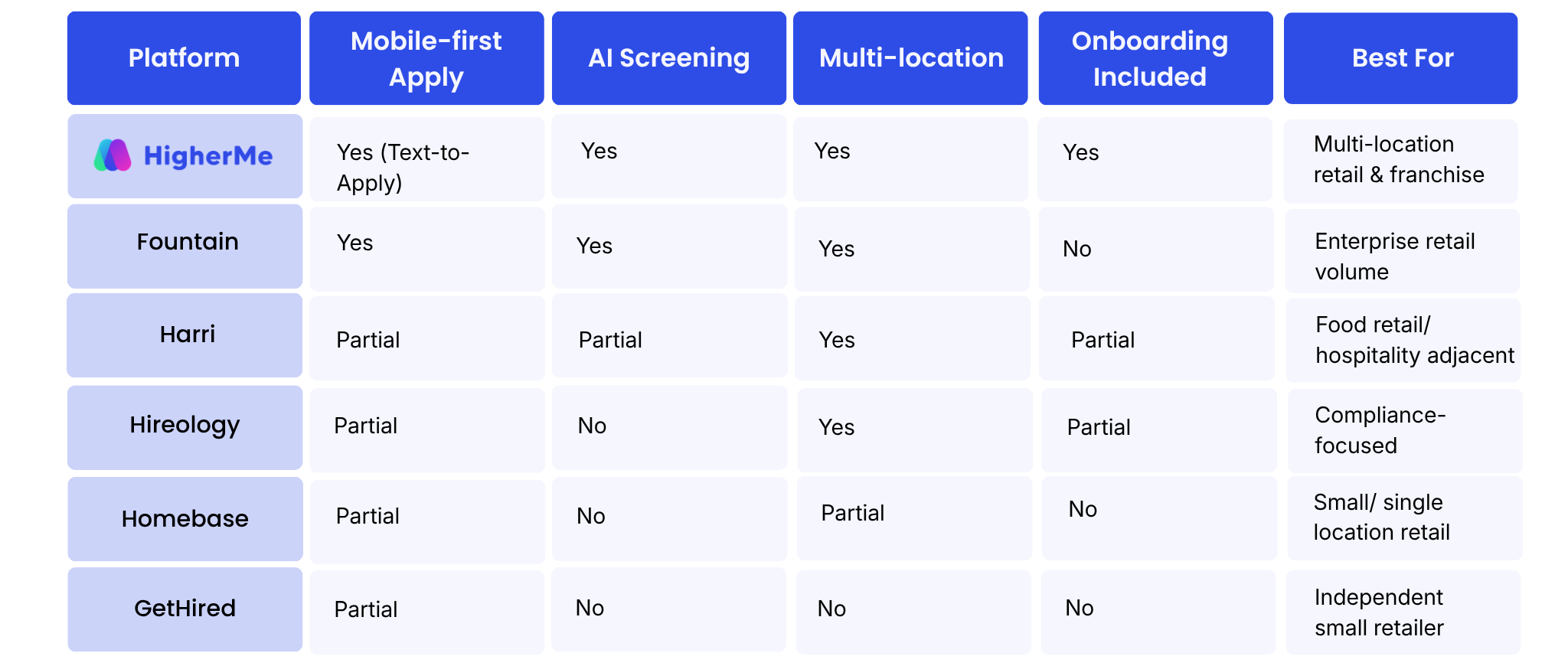
Quick Comparison Table
What Retail Operators Actually Need to Walk Away With
The retail hiring problem is not going to fix itself. Turnover at 60% annually is a structural feature of this industry, not a temporary trend. The operators who manage it best are not the ones who have figured out some magic retention formula. They are the ones who have removed every unnecessary obstacle between a candidate's first interest and their first shift.
A slow application. No follow-up text. Onboarding paperwork that takes three visits to complete. These are not small inconveniences, they are the reasons you lose good candidates to whoever called them back first.
See what HigherMe's hiring platform looks like for retail operators at higherme.com.
Frequently Asked Questions
Q1: What is the best hiring software for retail businesses in 2026?
For multi-location retail operators dealing with high frontline turnover and seasonal hiring surges, HigherMe is the strongest fit. It was built for exactly this kind of hourly, volume-heavy hiring: mobile-first applications, AI pre-screening, centralized multi-location visibility, and onboarding connected to the same platform. For enterprise retailers running at massive scale with dedicated HR teams, Fountain is also worth considering.
Q2: Why do retail businesses need hiring software different from standard ATS tools?
Standard ATS platforms were designed around corporate hiring. Resumes, multi-round interviews, structured approval chains. Retail frontline candidates are applying from phones, often between competing offers, and will not wait days for a callback. You need a tool built around fast mobile applications, text-based communication, and automated screening, not one that adds steps to a process that already needs to move faster.
Q3: How does Text-to-Apply work for retail hiring?
You place a poster or sign in your store, window, or dressing room with a keyword and phone number. A candidate texts the keyword, receives a link, and completes a short application directly from their phone, typically in under four minutes. No job board. No login. No resume needed. HigherMe's data shows candidates who apply via Text-to-Apply are 8x more likely to get hired than those sourced through other channels, because the intent is higher at the point of in-store application.
Q4: How do retail franchise operators maintain hiring consistency across multiple store locations?
The most practical approach is to standardize at the platform level. Once you set your application questions, screening criteria and interview stages, they are automatically applied across each location, ensuring consistency, not relying on individual managers to follow a checklist. With HigherMe’s Hiring Hub you can view each location’s pipeline in one dashboard and take bulk actions across locations without having to log into separate accounts.
Q5: Is AI screening appropriate for retail frontline hiring?
Yes, and for high-volume retail hiring it is practically necessary. When a seasonal push generates hundreds of applications across your locations, manual screening becomes a bottleneck that slows everything down. AI screening tools like HigherMe's NextMatch AI run conversational pre-screening automatically, filter for shift availability and location fit, and surface ranked candidates for managers to review. Managers spend time on the right people, not on reading through every application.
Book a Demo
We'll contact you as soon as possible to better understand how we can help you!