


Multi-location hiring is a mess without the right system. One property fills a role through indeed. Another uses Craigslist. A third still takes phone applications. Candidates get duplicated. Interviews happen at different times for the same role. One manager takes two days to respond. Another takes a week. The result: slow hiring, inconsistent quality, and talent slipping through the cracks. Without centralized visibility, hotel staffing becomes reactive instead of strategic. That's the problem Hireology solves. Structured, consistent hiring across multiple properties. But structured isn't always the same as fast. And fast hiring is still the constraint for most hospitality operators. If consistency is your priority and you have time for setup, Hireology is solid. If you need to move candidates through the process more quickly without losing consistency, these six alternatives are worth evaluating.
What Hireology Does Well
(And What Can Slow You Down)
Hireology is built for multi-location hiring. The platform emphasizes structured processes, consistent workflows, skills assessments, and strong onboarding. Hotels praise the user interface and customer support. Setup takes weeks but produces repeatable hiring that scales across properties.
Here's the thing: structured processes that ensure consistency can also add steps. If you're trying to fill three housekeeping positions this week and your workflow requires manager approval at three stages, you're adding friction that might not be necessary. Some users report system lag, particularly when filtering large applicant pools. Limited advanced customization means you're working within Hireology's guardrails, not building your own logic.
These aren't deal-breakers. They're tradeoffs. If consistency and compliance are more important than pure speed, the tradeoffs are worth it. If speed is your primary constraint, the structured approach can feel limiting.
The 6 Best Hireology Alternatives for Hospitality Hiring
1. HigherMe: Speed Without Sacrificing Consistency
HigherMe solves the same problem as Hireology - multi-location hiring, but from the opposite direction. Hireology starts with structure and adds speed. HigherMe starts with speed and adds structure through AI.
A candidate applies via Text-to-Apply or careers page. Application loads instantly. Zero lag. NextMatch AI pre-screens and ranks candidates by availability and experience. Managers open a shortlist, not a pile. Interviews happen fast. Onboarding is instant - no separate portal, no separate process.
The difference: HigherMe moves first, then ensures quality. Hireology ensures quality first, then moves.
HigherMe serves 40-plus hotel properties across Days Inn, Holiday Inn, LaQuinta, SpringHill Suites, Motel 6, PRG Hospitality. The platform handles multi-location consistency through location-specific settings and manager-level controls, not through approval workflows.
What you get:
- Text-to-Apply with instant load times and 88% completion rates.
- NextMatch AI that ranks candidates. Saves 30 minutes per candidate on screening.
- Automated interview scheduling with text rescheduling for no-shows.
- Paperless onboarding inside the same system.
- Hiring Hub for centralized visibility across all properties.
- ADP, Paychex, Checkr integrations.
- Optional payroll.
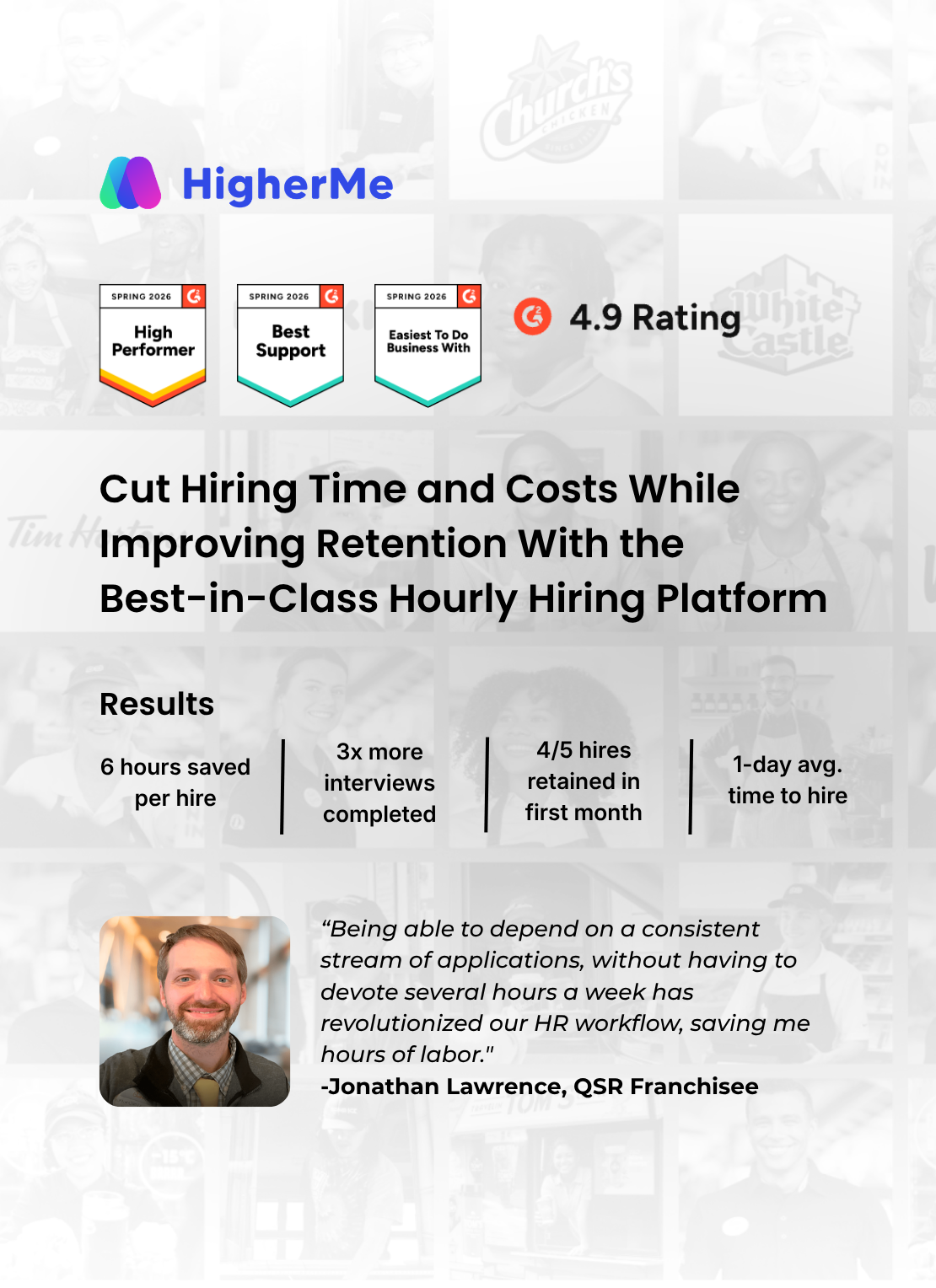
Average time-to-hire is two days. Setup is under 24 hours. No IT involved.
For multi-property operators who need centralized visibility without the setup overhead or the structured workflows that can slow hiring, HigherMe is purpose-built for that exact problem.
Best for: Multi-property hotels prioritizing speed and seamless onboarding across locations.
2. Paradox: AI Screening at Massive Scale
Paradox powers McDonald's global hiring. Olivia conducts screening 24/7 in 100+ languages. For hotel groups running thousands of hires annually with implementation budgets, it's proven infrastructure.
Implementation takes months. Paradox layers AI on top of existing HRIS/ATS infrastructure, not a complete hiring system. For multi-property hotel operators trying to move faster without months of setup, it's not a starting point.
Good for: Large enterprise hotel chains with significant implementation budgets and multi-thousand hire volumes.
3. Fountain: Funnel Automation at Volume
Fountain automates candidate progression through a hiring funnel. Stage-based workflows, SMS communication, funnel analytics. For UPS, Amazon DSP, and other high-volume frontline employers, it handles the automation overhead.
For hotels, the configuration required to set up Fountain for multi-location hiring is meaningful. Onboarding is limited. You'll need separate tools for the rest of the process. And the enterprise architecture means smaller operators often feel like they're paying for complexity they don't use.
Good for: Large hotel groups with 500+ annual hires and dedicated HR teams.
4. Harri: Full HCM With Hiring as One Piece
Harri combines hiring, scheduling, labor optimization, and compliance in one hospitality-native platform. If scheduling and labor management are as critical as hiring, the integration is valuable.
The tradeoff: hiring doesn't get the specialized focus it does in hiring-first platforms. The mobile app has had reliability issues. Setup takes weeks.
Good for: Hospitality companies where hiring, scheduling, labor, and compliance are equally important.
5. TalentReef: Hotel-Specific Hiring Platform
TalentReef is built specifically for hospitality. It handles hiring, onboarding, and candidate management in one system. Text-to-Apply. Customizable screening questions. Mobile-first interface. KPI-driven reporting showing which sources deliver quality candidates.
The limitation honestly stated: TalentReef's interface can be unintuitive. Setup is complex. You're customizing workflows for your specific needs, which takes time upfront. But once configured? It's hotel-native. You're not forcing hospitality hiring into a generic system.
Good for: Multi-location hotel franchisees, anyone wanting hotel-specific hiring platform.
6. Homebase: Scheduling-First, Simple Hiring
Homebase is a scheduling tool with hiring added. Free tier covers basics. Paid tiers add Indeed/ZipRecruiter posting, basic ATS, onboarding, payroll add-ons.
For single independent properties with occasional hiring, the free tier is accessible. Multi-property pricing is expensive. ATS is basic. Support is inconsistent.
Good for: Single independent properties with limited hiring volume and tight budgets.
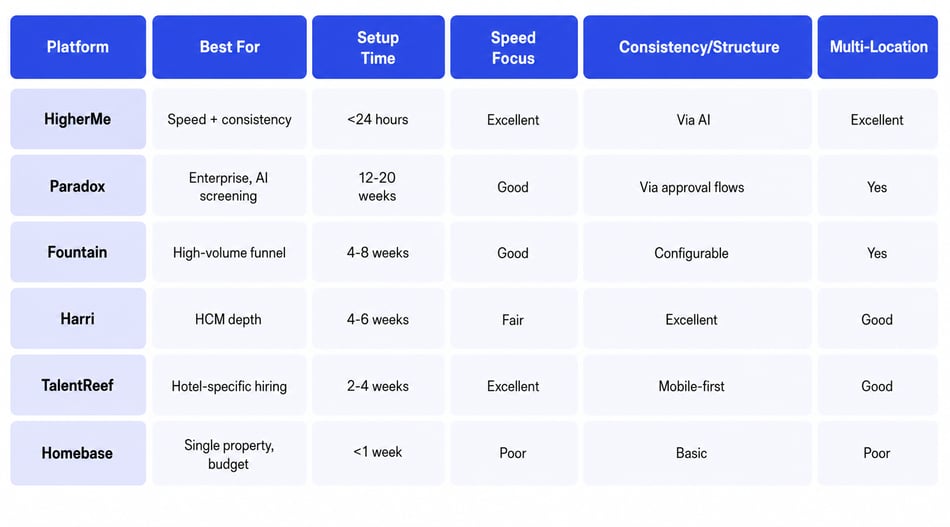
Quick Comparison
Conclusion
Hireology solves a real problem for multi-location hotel operators. It brings structure, consistency, and compliance. But structure adds steps. And in hospitality hiring, steps often mean slower hiring and candidates moving on.
HigherMe was built for the opposite scenario: speed first, consistency through intelligence rather than process. For multi-property hotel operators who need centralized visibility without implementation overhead or workflow friction, that's the better fit.
Visit higherme.com to know more.
Frequently Asked Questions
1. When does Hireology actually make sense versus HigherMe?
If compliance documentation and hiring consistency across properties are your primary concerns, and speed is secondary, Hireology's structured approach is valuable. If speed is your constraint and you're okay with AI-driven consistency instead of process-driven consistency, HigherMe moves faster.
2. Can I use Hireology without going through all the approval workflows?
You can configure workflows to be less rigorous. But you're working within Hireology's guardrails, not building your own. HigherMe's multi-location consistency comes from location-level settings and manager controls, not approvals.
3. How does Hireology compare to Harri?
Hireology is hiring-first with scheduling integration. Harri is full HCM with hiring as one piece. If hiring is your primary problem, Hireology is more focused. If you need scheduling and labor management alongside hiring, Harri integrates deeper.
4. Is the system lag real, or just user error?
Multiple verified users report lag when filtering large applicant pools. It's not a dealbreaker for most, but it's worth testing in a demo with realistic applicant volume.
5. How long does Hireology setup actually take?
2-4 weeks typically. That includes configuration, job board setup, workflow customization, and team training. Faster than Paradox or Fountain, slower than HigherMe. HigherMe's average time-to-hire is two days.
Book a Demo
We'll contact you as soon as possible to better understand how we can help you!